 Authorization Models for Agents
Approval Tiers for AI-Initiated Transfers
Tiering AI payments by consequence, not model capability, sets which transfers need a human.
Rail Governance Editors·
 Authorization Models for Agents
Spend Limits for Autonomous Payment Agents
How banks can enforce agent payment limits in policy, not prompts.
Rail Governance Editors·
 AI Agent Authentication
Prompt Injection Risks to AI Agent Authentication in Banking Environments
Banks must enforce authentication outside the model, because injected text can fake verification.
Rail Governance Editors·
 AI Agent Authentication
Session Management Risks in Multi-Step AI Agent Workflows
Banks must map where agent sessions start, pass, and end.
Rail Governance Editors·
 AI Agent Authentication
OAuth 2.0 Scopes and Least-Privilege Access for Banking AI Agents
Scopes alone can't contain a banking agent, so enforcement must sit outside the model.
Rail Governance Editors·
 Bank Technology Procurement
IT Security Review Checklist for Fintech AI Integration Approval
A fintech AI approval review must cover authority, action, and evidence.
Rail Governance Editors·
 AI Accountability
How Bank Exit Plans Should Treat an Embedded AI Payment Agent
Four termination protocols, built before go-live, can strip an AI agent's authority.
Rail Governance Editors·
 Banking API Infrastructure
API Tokenization Standards for Sensitive Banking Data in Transit
Tokenization, TLS, and FAPI each cover a gap the others leave.
Rail Governance Editors·
 GLBA & FTC Safeguards
GLBA Regulation P and Consumer Opt-Out Rights
Regulation P's opt-out rules must now track data flowing through AI.
Rail Governance Editors·
 GLBA & FTC Safeguards
GLBA Privacy Notice Requirements and Annual Delivery Rules
A guide to GLBA privacy notices and when annual delivery stops.
Rail Governance Editors·
 SOC 1 vs SOC 2 Decisions
SOC 1 Reports for Payment Processors and ACH Originators
How to read a SOC 1 report and meet 2026 Nacha fraud rules.
Rail Governance Editors·
 SOC 1 vs SOC 2 Decisions
What Bank Examiners Expect to See in a Vendor SOC Report
A clean SOC opinion is only a start for AI vendors.
Rail Governance Editors·
 Vendor AI Risk Evaluation
AI Vendor Due Diligence Questionnaire Criteria for Banks
A bank's AI vendor questionnaire must probe model behavior, not just security.
Rail Governance Editors·
 SOC 2 in Financial Services
GLBA Pretexting Rule Obligations for AI-Assisted Customer Interactions
GLBA's pretexting rules already cover AI agents, so document your controls.
Rail Governance Editors·
 Banking API Infrastructure
OAuth 2.0 and FAPI Implementation for Bank API Security
FAPI 2.0 hardens OAuth with PAR, PKCE and bound tokens.
Rail Governance Editors·
 NACHA Operating Rules
NACHA WEB Debit Rule and Account Validation Requirements
Account validation is mandatory for web debits, but it won't verify ownership.
Rail Governance Editors·
 Wire vs ACH Decisions
Wire Transfer Irrevocability and Its Implications for Fraud Recovery
Settled wires can't be reversed, so recovery depends on speed.
Rail Governance Editors·
 Same-Day ACH Operations
Same-Day ACH Fraud Exposure and Risk Controls for Financial Institutions
Faster ACH settlement compresses fraud detection to minutes.
Rail Governance Editors·
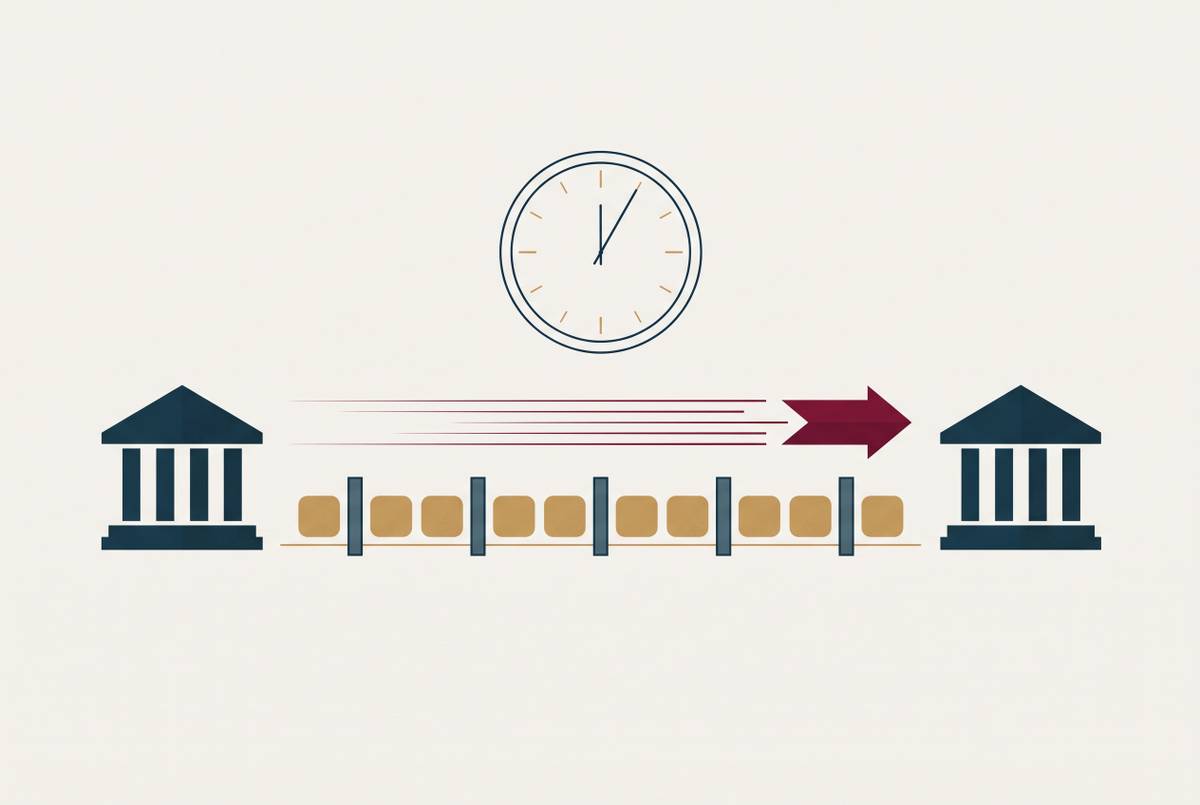 Wire vs ACH Decisions
ACH vs Wire Transfer Speed in Intraday Bank Operations
Banks choose payment rails based on timing needs and error recovery, not speed alone.
Rail Governance Editors·
 Wire vs ACH Decisions
ACH vs Wire Transfer Operational Trade-Offs for Bank Treasury Teams
Treasury teams must weigh cost, speed, and settlement finality to choose the right payment rail.
Rail Governance Editors·
 Same-Day ACH Operations
ACH Transfer Posting Times Across Major U.S. Banks
Three separate clocks determine when ACH transfers actually arrive at your bank.
Rail Governance Editors·
 OCC and Fed Rulemaking
Regulation GG Unlawful Internet Gambling Restrictions on AI Payment Agents
Banks must embed gambling-restriction rules into AI payment agent permissions and monitoring.
Rail Governance Editors·
 AI Model Risk Management
Ongoing Monitoring Requirements for AI Models in Production Banking
Banks must detect AI failures, explain decisions, and assign accountability.
Rail Governance Editors·
 Conversational Banking Interfaces
ADA and Section 508 Compliance for Bank Voice Interfaces
Voice banking systems must meet ADA and Section 508 standards beyond website accessibility rules.
Rail Governance Editors·
 Conversational Banking Interfaces
NLP Hallucination and Transaction Confirmation Errors in Voice Banking
Voice banking amplifies AI errors into irreversible transactions without visual safeguards.
Rail Governance Editors·
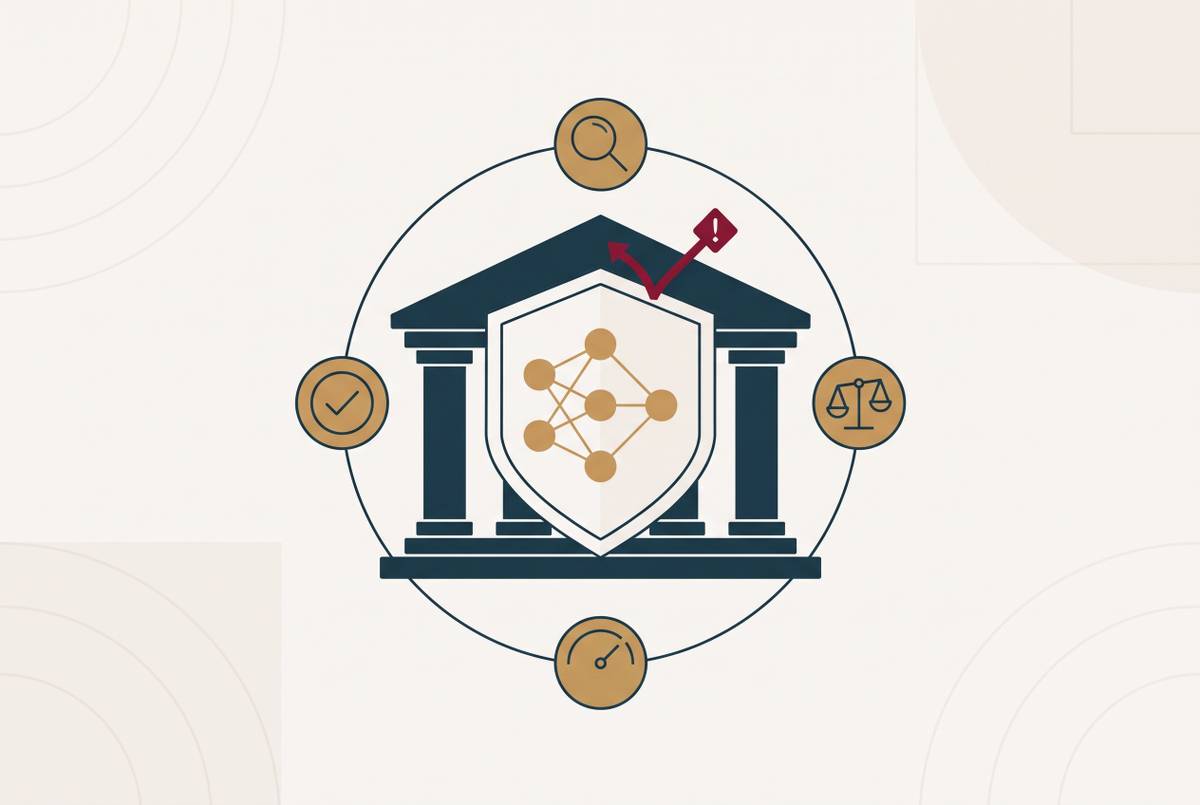 AI Governance Frameworks
NIST AI Risk Management Framework 2023 Updates for Financial Institutions
Banks must map, measure, and manage AI systems across overlapping regulatory frameworks.
Rail Governance Editors·
 Conversational Banking Interfaces
Voice Authentication Standards for Banking Transactions
Banks must separate voice convenience from voice authentication to prevent account takeover.
Rail Governance Editors·
 RPA to Agentic AI Transition
RPA Limitations in Bank Back-Office Operations
RPA works for narrow tasks but crumbles under variation and judgment calls.
Rail Governance Editors·
 RPA to Agentic AI Transition
Control Framework Gaps When Banks Migrate From RPA to Agentic AI Systems
Banks must map where agents depart from fixed rules and install safeguards before deployment.
Rail Governance Editors·
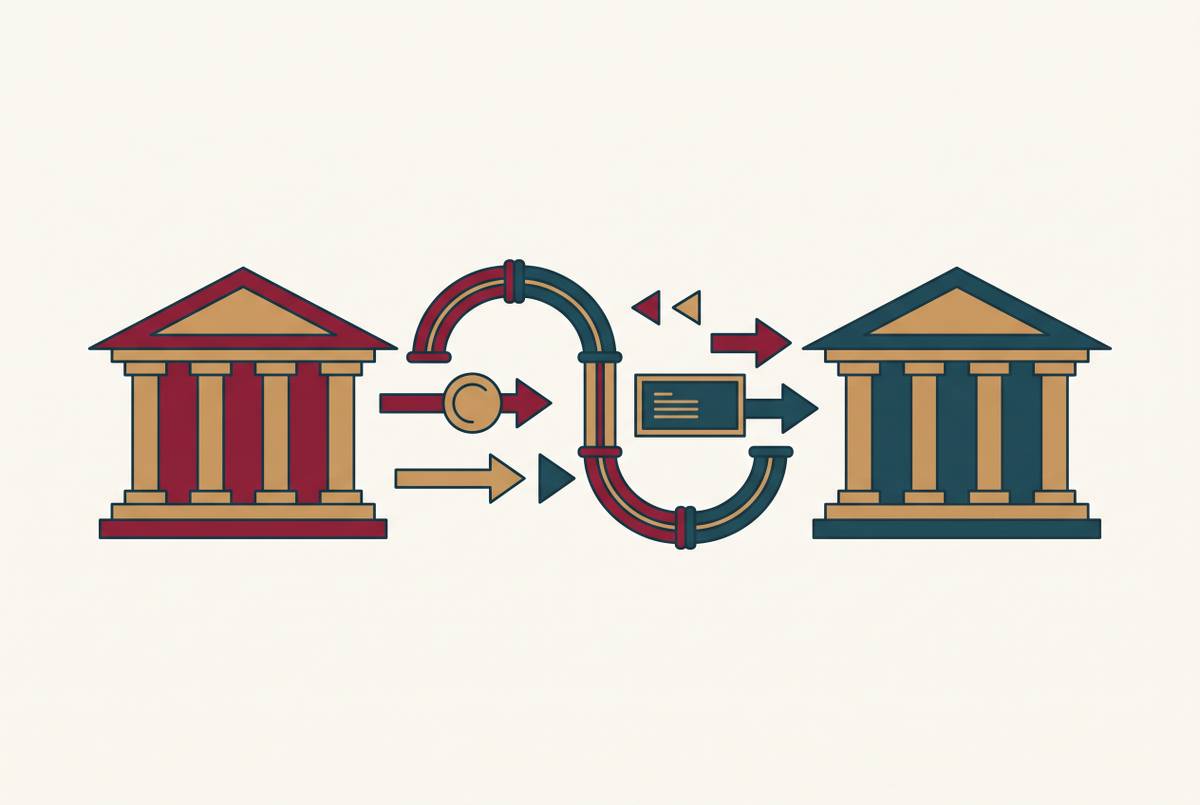 ACH & Payment Rails
How ACH Payment Processing Works in U.S. Banking
Banks must validate authorization and maintain controls across the entire ACH payment journey.
Rail Governance Editors·
 AI Accountability
Directors and Officers Liability Exposure for AI-Initiated Banking Losses
Banks lack clear rules for who pays when AI agents make unauthorized transactions.
Rail Governance Editors·
 AI Accountability
Insurance Coverage Gaps for Losses Caused by Autonomous AI Banking Agents
Banks face insurance claims denials when their own AI agents cause authorized losses.
Rail Governance Editors·
 Accountable AI
ISACA COBIT and AI Governance Certification Relevance for Bank Risk Functions
Banks need governance frameworks that prove AI agents' actions remain accountable.
Rail Governance Editors·
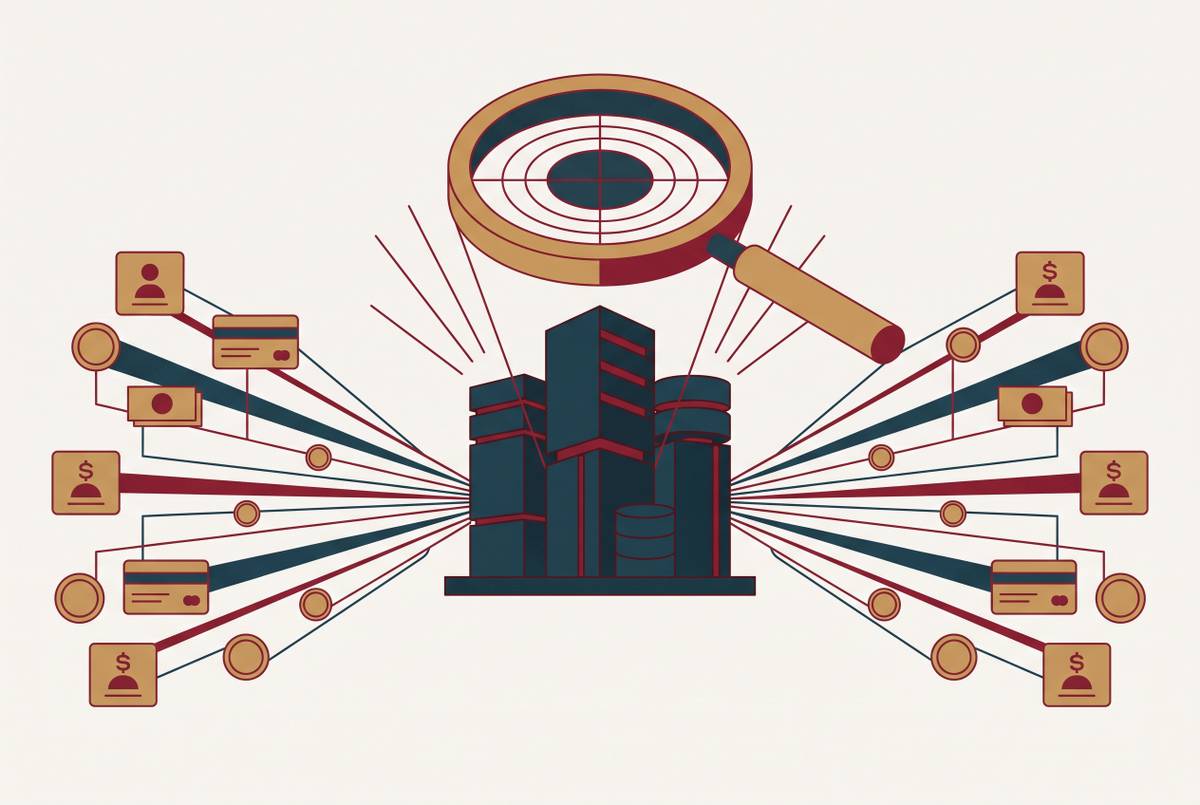 Examiner Expectations
Concentration Risk Examination Expectations for Single-Vendor AI Banking Deployments
Regulators expect banks to prove they can stop or replace single-vendor AI systems.
Rail Governance Editors·
 Examiner Expectations
Consumer Complaint Management Examination Expectations for AI-Initiated Errors
Banks must document AI errors in complaints clearly or face examiner scrutiny without settled rules.
Rail Governance Editors·
 OCC and Fed Rulemaking
Regulation B Adverse Action Notice Requirements for AI Credit Decisions
Lenders cannot cite AI complexity to avoid naming specific denial reasons.
Rail Governance Editors·
 OCC and Fed Rulemaking
Regulation CC Funds Availability Rules for AI-Processed Deposit Transactions
Banks using AI for deposit holds must document specific reasons or face Regulation CC violations.
Rail Governance Editors·
 OCC and Fed Rulemaking
Regulation W Affiliate Transaction Limits for AI-Executed Banking Operations
Banks deploying AI agents in affiliate transactions face unclear Regulation W compliance rules.
Rail Governance Editors·
 OCC and Fed Rulemaking
Office of Foreign Assets Control Sanctions Screening Obligations for AI Payment Agents
OFAC's strict liability applies to AI payment agents, so screening must run before every payment.
Rail Governance Editors·
 OCC and Fed Rulemaking
Unfair Deceptive Abusive Acts Practices Exposure for AI Transaction Agents
Banks face UDAAP liability in three places where AI agents act.
Rail Governance Editors·
 OCC and Fed Rulemaking
Regulation II Interchange Fee Rules for AI-Initiated Debit Transactions
AI agents expose gaps in Regulation II's debit rules.
Rail Governance Editors·
 OCC and Fed Rulemaking
Regulation Z Applicability to AI-Initiated Credit Account Transactions
Reg Z assumes a human decides at each purchase, and AI agents break that.
Rail Governance Editors·
 OCC and Fed Rulemaking
Bank Secrecy Act Suspicious Activity Reporting Obligations for AI-Initiated Transactions
Suspicious activity rules assume a human decision, and AI agents quietly break that assumption.
Rail Governance Editors·
 Examiner Expectations
Change Management Examination Expectations for AI System Updates at Banks
Examiners now expect banks to document every AI update and prove who approved it.
Rail Governance Editors·
 OCC and Fed Rulemaking
Dodd-Frank Section 1033 Data Access Rules and AI Transaction Agents
The data-access rule is enjoined, not dead, so plan accordingly.
Rail Governance Editors·
 AI Accountability
Fiduciary and Agency Law Exposure When AI Executes Customer-Directed Transfers
Banking law assumes a human decides, and AI agents break that.
Rail Governance Editors·
 Examiner Expectations
Liquidity Risk Examination Expectations for Banks Running Automated Payment Agents
Agent-driven payments erase informal controls, and examiners are still writing the rules.
Rail Governance Editors·
 OCC and Fed Rulemaking
Regulation E Error Resolution Obligations for AI-Initiated Electronic Fund Transfers
Regulation E's dispute deadlines still bind banks when AI agents move the money.
Rail Governance Editors·
 OCC and Fed Rulemaking
Gramm-Leach-Bliley Safeguards Rule Obligations for AI Transaction Agents
AI agents handling customer data inherit the same security obligations as human employees.
Rail Governance Editors·
 Accountable AI
PCI DSS Scope Determination for AI Agents Handling Payment Card Data
AI agents handling payment data fall under PCI DSS scope based on capability, not labels.
Rail Governance Editors·
 OCC and Fed Rulemaking
Federal Reserve Regulation J Compliance for AI-Initiated Fedwire Transfers
Banks must renegotiate security agreements to clarify AI authority and liability exposure.
Rail Governance Editors·
 AI Accountability
Operational Risk Capital Implications of Agentic AI in Basel III Frameworks
Banks are scaling AI agents faster than capital rules can measure the operational risks they create.
Rail Governance Editors·
 Accountable AI
IEEE Standards for Autonomous AI Systems in Critical Infrastructure
Engineering standards built for robots now guide AI agents handling real bank transactions.
Rail Governance Editors·
 Accountable AI
Industry Self-Regulatory Initiatives for Responsible AI in Financial Services
Banks are filling a regulatory gap by writing their own AI governance rules.
Rail Governance Editors·
 Accountable AI
SWIFT Controls Framework Application to AI-Initiated Correspondent Transactions
Banks must map CSCF controls to AI decision points before the 2026 audit window closes.
Rail Governance Editors·
 Accountable AI
EU AI Act High-Risk Classification and Its Implications for US Banks
US banks must comply with EU's high-risk AI rules by December 2027, regardless of location.
Rail Governance Editors·
 Accountable AI
ISO 42001 AI Management System Standard in Banking Contexts
Banks need ISO 42001 to prove AI systems are managed, not just deployed.
Rail Governance Editors·
 Accountable AI
FFIEC IT Examination Handbook Requirements for AI-Integrated Core Systems
Banks must map AI agents to eleven existing regulatory booklets, not new guidance.
Rail Governance Editors·
 AI Governance Frameworks
AI Policy Documentation Requirements for Regulated Banking Institutions
Banks must document agentic AI systems under existing rules despite the carve-out.
Rail Governance Editors·
 AI Governance Frameworks
Incident Response and Remediation Standards for AI Transaction Failures
Banks executing AI transactions need detection, containment.
Rail Governance Editors·
 AI Governance Frameworks
Configurable AI Controls as a Regulatory Risk Management Tool for Banks
Banks must build controls for agentic AI that regulators expect but haven't yet explicitly mandated.
Rail Governance Editors·
 AI Governance Frameworks
Human-in-the-Loop Control Design for High-Value AI Payment Approvals
Banks are building thresholds and kill switches to catch AI payment mistakes before money clears.
Rail Governance Editors·
 AI Governance Frameworks
Board-Level AI Governance Structures for Transaction-Executing Systems
Banks need board oversight of AI agents that execute transactions, not just recommend them.
Rail Governance Editors·
 Examiner Expectations
BSA Examination Exposure from AI-Generated Transaction Narratives
Banks face exam risk when AI drafts SARs without full traceability.
Rail Governance Editors·
 Examiner Expectations
Fair Lending Examination Risk When AI Selects Transaction Parameters
Regulators are catching AI systems that set credit parameters mid-transaction.
Rail Governance Editors·
 Examiner Expectations
Cybersecurity Examination Expectations for AI Systems on Banking Rails
Regulators now demand proof of AI governance and accountability, not just compliance checklists.
Rail Governance Editors·
 Examiner Expectations
Audit Trail Standards Examiners Expect for AI-Initiated Banking Actions
Regulators expect banks to document exactly how AI agents make decisions, not just what they decide.
Rail Governance Editors·
 Examiner Expectations
Third-Party Risk Management for AI Vendors Executing Banking Transactions
Banks must clarify accountability before deploying AI agents that execute transactions on their own.
Rail Governance Editors·
 Examiner Expectations
Model Validation Requirements for AI Agents That Execute Transactions
Banks must validate AI agents that execute transactions before regulators impose standards.
Rail Governance Editors·
 Examiner Expectations
How Bank Examiners Test AI Transaction Controls in Safety and Soundness Reviews
Examiners apply old safety rules to new AI systems that regulators haven't formally covered yet.
Rail Governance Editors·
 OCC and Fed Rulemaking
Proposed OCC Fintech Charter Implications for Agentic Banking Vendors
OCC charter denials reveal the compliance floor agentic vendors can't skip.
Rail Governance Editors·
 OCC and Fed Rulemaking
State Money Transmitter Licensing Exposure for AI Payment Agents
AI payment agents face licensing exposure unless they never touch the funds themselves.
Rail Governance Editors·
 OCC and Fed Rulemaking
Interagency AI Principles and Their Operational Gaps for Banks
Regulators set AI governance expectations but left banks to invent the playbook themselves.
Rail Governance Editors·
 OCC and Fed Rulemaking
CFPB Examination Procedures for Automated Account Actions
Banks must prove automated account decisions meet the same legal standards as human ones.
Rail Governance Editors·
 OCC and Fed Rulemaking
NCUA Regulatory Expectations for AI Deployment in Credit Unions
Credit unions face examination scrutiny on AI governance whether formal rules exist or not.
Rail Governance Editors·
 OCC and Fed Rulemaking
FinCEN Recordkeeping Rules for AI-Initiated Wire Transfers
Banks must verify human identity before AI agents execute wire transfers, not after.
Rail Governance Editors·
 OCC and Fed Rulemaking
Federal Reserve Supervisory Expectations for AI in Payment Systems
Banks must now write their own AI governance rules before examiners do.
Rail Governance Editors·
 OCC and Fed Rulemaking
OCC Model Risk Guidance Applied to Agentic AI Systems
Regulators exclude agentic AI from model risk rules, leaving banks to build their own controls.
Rail Governance Editors·
 Features
NACHA Operating Rules Compliance for AI-Initiated ACH Entries
AI agents initiating ACH entries must meet stricter fraud monitoring rules starting 2026.
Rail Governance Editors·
 Features
Examiner Findings in Published AI-Related Enforcement Actions at Banks
Regulators are enforcing old compliance rules against new AI systems with unprecedented precision.
Rail Governance Editors·
 Features
SOC 2 Type II Certification Scope for AI Banking Vendors
Scope decides what SOC 2 Type II actually covers for AI banks.
Rail Governance Editors·
 Features
AI Governance Maturity Models for Community Banks and Credit Unions
Community banks and credit unions are running AI without the governance to match.
Rail Governance Editors·
 Features
NIST AI RMF Applied to Agentic Banking Deployments
How banks can govern AI agents that execute transactions without human review at each step.
Rail Governance Editors·