CFPB Examination Procedures for Automated Account Actions
Banks must prove automated account decisions meet the same legal standards as human ones.

CFPB examination procedures apply the same legal standards to an automated decision as to a human one. If a bank cannot document why an algorithm closed an account or denied credit, that failure is treated exactly like a loan officer who can't explain a denial, and the exam findings look the same either way.
Bureau officials confirmed this position in June 2024: examinations focus on compliance with federal consumer financial laws, full stop, regardless of whether AI made the call. The standard doesn't move because the tool changed underneath it. An institution that deploys a model to close accounts or flag fraud carries full responsibility for every output that model produces, the same way it would if a person had made each of those calls one at a time.
There's a useful shorthand here: if a human employee couldn't take an action without a documented reason, an algorithm can't either. That rule hasn't budged even as the bureau's posture around exams has shifted. The 2025 "Humility in Supervision" changes brought tighter scoping, advance notice to institutions, and shorter exam timelines, though the bureau still expects self-reporting, still wants institutions to spot their own patterns of failure, and still wants problems resolved before they become bigger problems. Lighter federal exam intensity doesn't shrink legal exposure; it just changes when and how that exposure gets found.
State regulators and the prudential agencies, OCC, the Fed, FDIC, NCUA, have told the GAO the same thing in their own words: existing law and existing guidance, including model risk management and third-party risk frameworks, apply whether or not AI sits inside the process. None of what follows is speculation about where regulation might go, since it's drawn from exam manuals and enforcement guidance already in use.
What "specific reasons" actually means under ECOA when an algorithm makes the decision
CFPB Circular 2023-03 addressed creditors that use complex algorithms, including AI, to make credit decisions. The legal requirement it walked through wasn't new: it's the same one that's governed manual underwriting for decades. ECOA and Regulation B require a specific, understandable reason for an adverse action, one that matches what actually drove the decision rather than a generic model score or a checkbox chosen for convenience.
The circular named what fails this test outright. "The model rejected you" isn't a reason; the bureau flagged that phrase specifically as insufficient. Reaching for one of the CFPB's sample-form checkboxes fails too, when it doesn't match the actual factor that drove the algorithm's outcome. An explanation buried in technical language that an ordinary consumer can't parse fails for the same reason; understandability is part of the legal requirement, not a nice-to-have layered on top of it.
Circular 2023-03 itself was rescinded in 2025, and that's worth sitting with for a second, because it's easy to misread. The circular's rescission doesn't touch the ECOA obligation underneath it: that obligation was never created by the circular, only interpreted by it. The bureau has kept signaling that existing consumer protection law covers every technology a creditor might use, whether the circular that once explained it is still on the books or not.
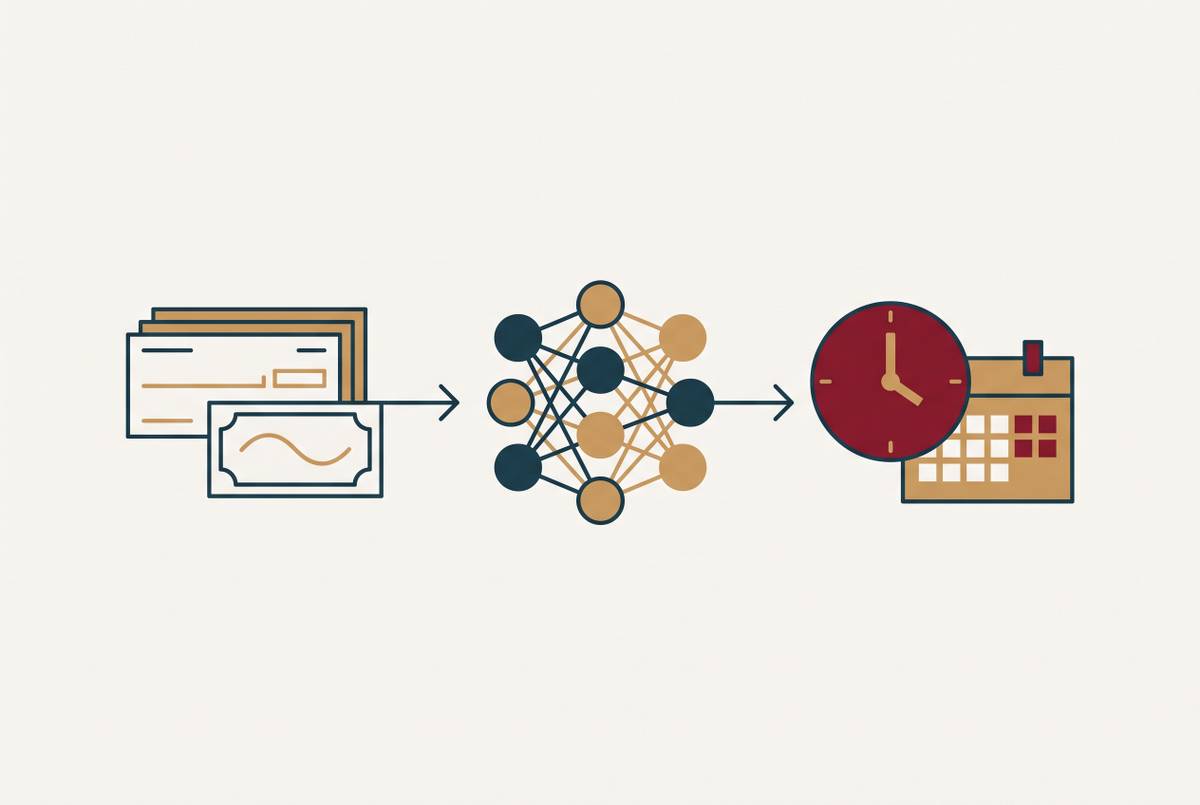
What does this mean day to day? An institution needs to trace which input features drove a specific automated decision and put that into plain language at the moment adverse action happens, not weeks later when someone reconstructs it from logs. That's a real operational lift, since the explanation has to exist as the decision is made, wired into the system itself, rather than assembled after a complaint arrives.
The Q1 2026 Wolters Kluwer Banking Compliance AI Trend Report backs this up with a number worth noting: 28.4% of financial institutions named explainability and transparency as their single most acute regulatory concern, the highest-ranked category in the survey. That's the top of the list, which tells you where compliance teams already feel the most pressure and where examiners are likely to spend the most time.
How transaction-level audit trails function as examiner evidence, not just internal records
Adverse action notices and audit trails do different jobs, and examiners need both. The notice documents the decision and its stated reason, while the audit trail documents what the system actually did, step by step, and when it did it. Confuse the two and a bank ends up with half the record an exam requires.
EFTA and Regulation E set the baseline for anything involving payments. The CFPB's Compliance Aid, issued in January 2025, clarified that error resolution procedures, transaction records, and consumer disclosures apply in full to AI-initiated transfers. A transfer an AI agent initiates gets the same Reg E treatment as one a teller keys in by hand.
An audit trail that survives examiner review has a few specific features. It's immutable and timestamped, recording each automated action, what or who triggered it, and under what rule. It links that action back to whatever authorization or policy permitted it in the first place, and it carries an error resolution record: any dispute that came in, how the system flagged or escalated it, and how it got resolved.
There's a UDAAP angle sitting underneath all of this. CFPB exam authority covers unfair, deceptive, or abusive acts and practices in automated contexts just as much as manual ones. A pattern of erroneous automated transfers that a bank can't reconstruct isn't only a Reg E gap; it's a potential UDAAP problem layered on top of it.
Horizontal reviews raise the stakes further. The bureau runs these across multiple institutions at once, looking at a single product or practice. A bank that can't produce transaction-level records in that setting doesn't just fail its own exam; it becomes part of the pattern the bureau is documenting across the whole market. No specific number is needed to make this point land: the exam manual sets the requirement, and volume doesn't change what's owed.
How model risk management expectations apply to AI systems making account-level decisions
OCC Bulletin 2026-13 and SR 26-2 replaced SR 11-7 as the governing model risk management framework in April 2026. That matters directly here, because any AI system shaping an account action is very likely a "model" under this definition, which pulls it into the full weight of model risk management expectations.
One carve-out is worth naming precisely: generative AI and agentic AI sit explicitly outside the current guidance's scope, with a separate request for information planned down the line. Read that carefully; this signals that more specific guidance is coming, not that these systems currently escape scrutiny. Examiners still apply general principles to agentic systems even without a bespoke rulebook built for them yet.
For AI models the revised framework does cover, a few things stay non-negotiable. Board-level governance and clear model ownership matter first: across the industry, institutions are still working out which executives actually own AI governance and which risk indicators apply to it, an unsettled area even among sophisticated players. A centralized model inventory matters too, where every model touching account actions gets documented and risk-tiered, alongside independent validation, done by a team separate from whoever built or runs the model. Lifecycle monitoring stays essential as well, because validation isn't a one-time event that happens at launch and then gets filed away.
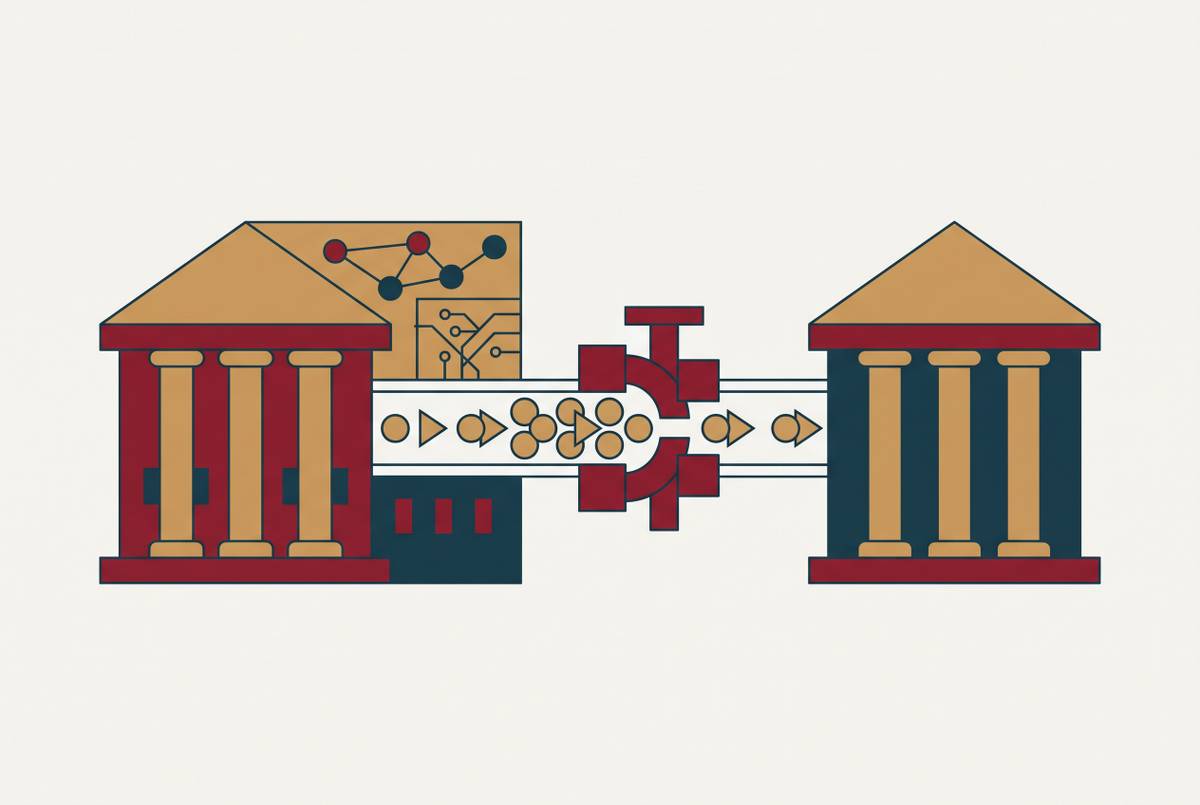
Vendor relationships don't create distance from any of this. The revised guidance strengthens third-party provisions specifically: a bank running an AI system built by a fintech or cloud vendor remains on the hook for understanding and validating that system, in full, as if it built it in-house.
Examiners keep finding the same gaps: shadow models that never made it into the formal inventory, validation performed by the same team that built the model, which defeats the point of independent review, and documentation that describes what a model was designed to do but says nothing about how it's actually performing months or years later. The May 2025 GAO report reviewed several large banks the OCC examined between 2019 and 2023 and found their AI model risk ratings didn't explicitly capture AI-specific risk factors at all. That's a documented gap, on the record, and it's the kind of thing future reviews are built to close.
What the CFPB's examination structure means for how institutions should prepare documentation
Two exam types show up in practice. Target reviews focus on a single institution, usually triggered by complaint volume or a specific concern the bureau has already flagged; this is typically the first sign an institution is under scrutiny for an automated practice. Horizontal reviews cut across institutions, built around a single product or practice, which means a bank can get pulled in without ever having drawn individual attention on its own.
Before examiners even show up, they gather what's already available: complaint data inside the CFPB, information from other federal sources, peer comparisons across similar institutions. By the time an exam team walks in the door, they may already have a sense of where an institution sits relative to its peers.
The bureau's current posture leans on self-reporting: institutions are encouraged to flag their own violations and resolve them through supervision rather than wait for enforcement to find them. That only works if an institution actually knows what its automated systems have done, which circles back to the audit infrastructure described above, since self-reporting isn't possible without the underlying records to self-report from.
When documentation requests come in, institutions need to move fast on a specific set of materials: policy and procedure documents describing how automated decisions get governed, model inventory entries for any AI system touching account actions, sample adverse action notices with rationale traceable back to system outputs, transaction-level logs for the period under review, and validation reports alongside exception logs. That's a five-part list, and every piece needs to already exist before the request lands; building it after the fact rarely goes well.
One more wrinkle worth flagging: the CFPB's Office of Cybersecurity actively looks for unauthorized AI use through shadow IT discovery methods. An institution that's deployed an AI system without formally registering it in a governance framework risks an exam finding before it even has documentation ready to respond with.
How agentic AI executing real transactions raises the documentation stakes beyond traditional automated rules
Agentic AI behaves differently from a rules-based automation script, and that difference matters for compliance. An agent plans and carries out multi-step tasks, calls on tools, and can chain actions across systems in sequence, and each step in that chain is potentially its own account action, carrying its own separate documentation requirement.
The scale here isn't theoretical. The agentic AI market for banking and credit unions was valued at $4.8 billion in 2025 and is projected to reach $78.6 billion by 2034. That kind of growth curve means examiner attention on these systems is close to a certainty, not some distant possibility to plan around later.
A few specific exposure points show up inside an agentic workflow. Every automated transfer or payment the agent kicks off is a Regulation E event that needs a complete record behind it, and every credit-related action, an account closure, a limit cut, a hold placed on funds, is a potential adverse action that needs a contemporaneous, specific reason attached to it. Multi-step chains can also blur exactly which step counted as the regulated action in the first place; examiners will ask an institution to point to that step precisely, not gesture at the general process.
There's a systemic dimension too. S&P Global noted in 2025 that automation now links trading, credit, and compliance systems across institutions through continuous data exchange. Correlated agent responses to the same shock, across many institutions at once, could amplify volatility well beyond what any single bank's risk model accounts for. Formal rules haven't caught up to that concern yet, but regulators are watching it.
The governance point underneath all of this is architectural. An agent running on existing banking rails without configurable controls and a complete per-action audit trail simply can't meet the documentation standard examiners already apply, no matter how good its underlying model is. The design of the agent decides whether compliance is even achievable, not the compliance team's intentions after the fact.
The practical compliance baseline an institution needs before automating account actions
Four things need to exist before any automated account action goes live. Explainability at the decision level means a human-readable reason for every adverse account action, generated at the moment it happens, not pieced together afterward from logs. An immutable transaction-level audit trail means every action, the rule or model output behind it, the timestamp, and any exception, captured in a form examiners can review without needing someone at the bank to translate it for them. Model governance documentation means the system sitting in the model inventory with a risk tier, clear ownership, a validation history, and an ongoing monitoring plan attached, because a vendor relationship doesn't transfer this responsibility away. Configurable institutional controls round out the list, meaning the ability to scope what the system can and can't do, set thresholds, and step in when needed, since examiners will ask who governs the system and "the vendor handles that" isn't an acceptable answer.
An AI agent built on existing banking rails, with full audit output, per-action records, and controls the institution actually configures, can meet the same exam standard as any other process a bank runs. The documentation requirement doesn't change; what changes is whether the architecture underneath the agent was built to support it from the start.
SOC 2 certification shows security controls exist, and examiners will look past it to the specific ECOA, Regulation E, UDAAP, and model risk documentation sitting underneath, since certification speaks to the soundness of the walls, not the completeness of the compliance record inside them.
Institutions with real audit infrastructure, ones that actually know what their automated systems have done, are the ones positioned to use the bureau's current supervisory posture as a genuine risk management tool: resolving issues quietly in supervision rather than getting caught later in enforcement. The May 2025 GAO report found that even large banks reviewed by the OCC were missing AI-specific risk factors in their model risk ratings, and that's not a small gap. Building that documentation baseline now puts an institution ahead of where examiners found the rest of the sector in its most recent formal look.